 AI-assisted illustration · not a real customer installation
Drei Teile, eine klare Antwort
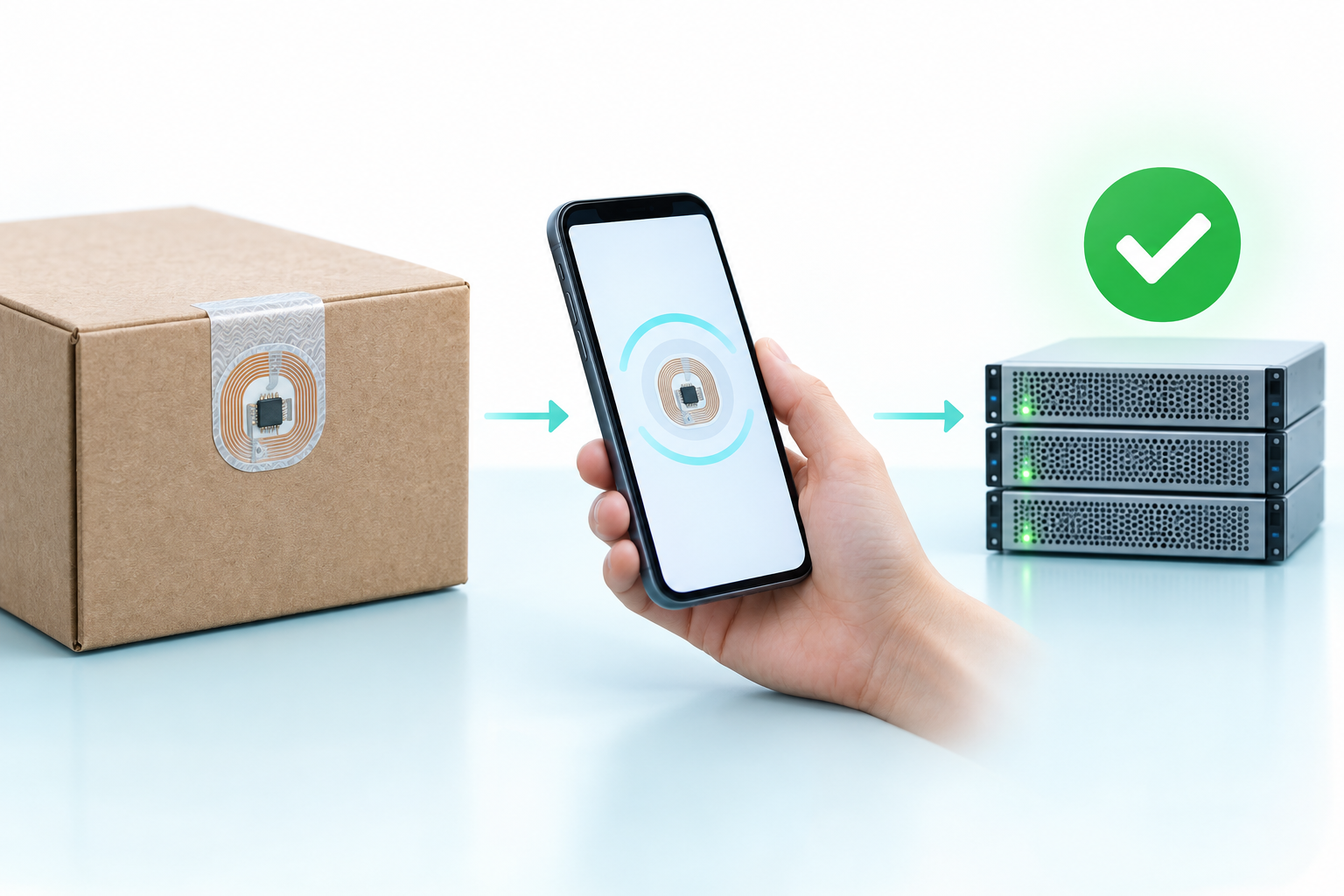
Das Sicherheitslabel erzeugt den Nachweis, das Smartphone übermittelt ihn und der Server bewertet ihn.
 VeriSeal©
Technology
VeriSeal does not rely exclusively on a copyable chip ID, but combines cryptographic tag data, server status and context.
In one sentence
A security label connects the real product with VeriSeal. During the scan, the server not only checks a number, but also dynamic cryptographic proof, the current seal status and the known product history. VeriSeal then shows released product data and documents the event - from the factory through transport and handover to service and recycling.
 AI-assisted illustration · not a real customer installation
Simply explained
Beim Scannen prüft VeriSeal nicht nur einen Link, sondern Echtheit, Manipulation, Status und Berechtigung. Das Ergebnis wird einfach als verständlicher Vertrauensstatus angezeigt.
Hinter einem einfachen Scan
Für den Nutzer bleibt der Ablauf leicht. Im Hintergrund werden Identität, aktueller Nachweis und Serverstatus gemeinsam geprüft.
AI-assisted illustration · not a real customer installationDas Sicherheitslabel erzeugt den Nachweis, das Smartphone übermittelt ihn und der Server bewertet ihn.
 AI-assisted illustration · not a real customer installation
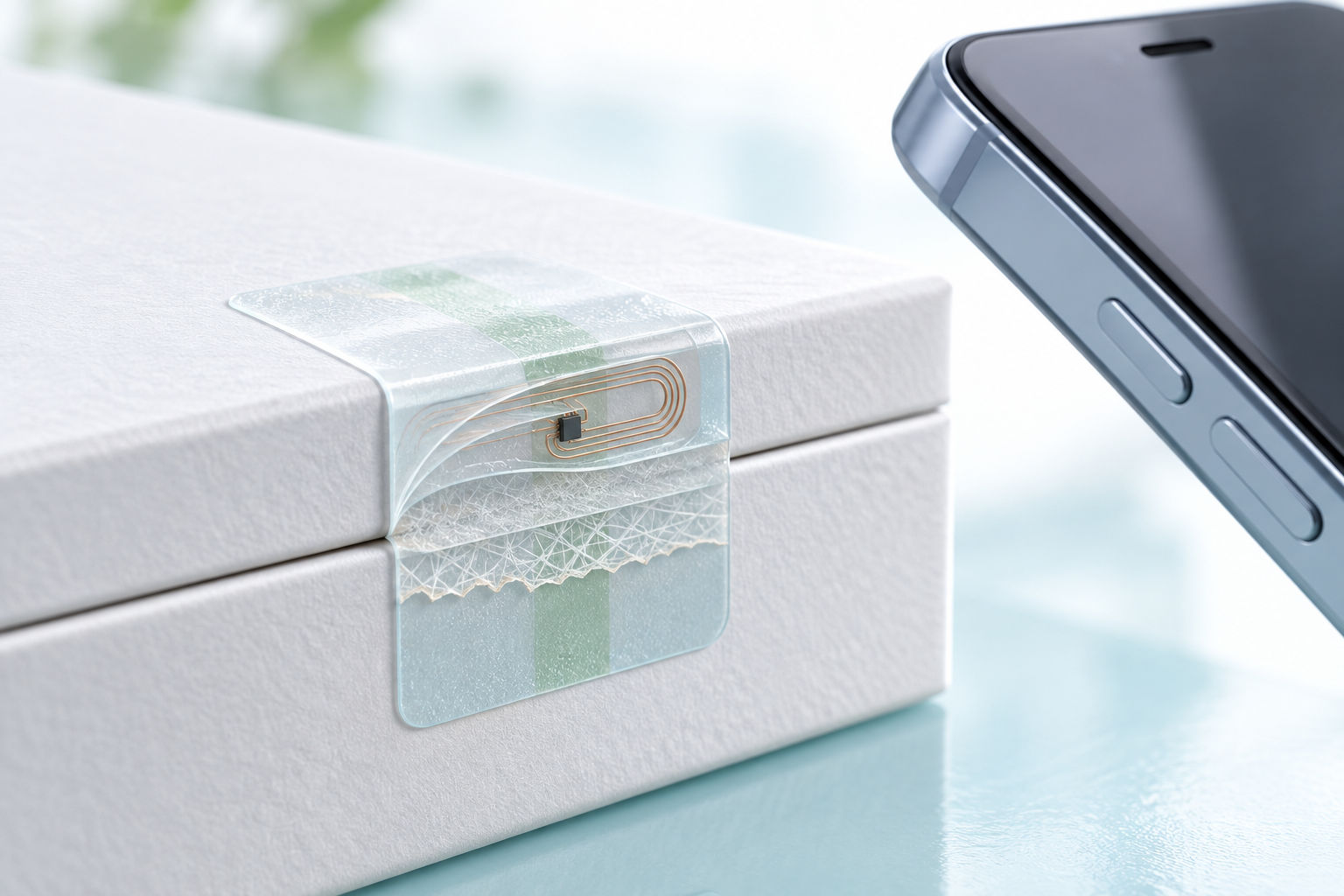
Antenne, Chip, Klebeschichten und Manipulationsschleife verbinden Verpackung und digitale Identität.
NFC, UHF, QR or barcode lead to the unique product identity.
NTAG 424 DNA generates dynamic SUN/SDM data that the server cryptographically checks.
Replay protection, tamper loop, event history and risk rules determine the status.
Testing and product life cycle are recorded close to revision and anchored as an option.
NTAG 424 DNA TagTamper
The NFC chip generates dynamic sun/SDM data with each scan. A separate, fragile tamper loop over the packaging opening also provides an authenticated opening status. VeriSeal checks cryptogram, counter, tag assignment, replay risk and server status together.
Functional sequence in 60 seconds
The video shows the complete process from tag, server check, product database, manipulation status and optional blockchain anchoring.
Hybrid trust architecture
PostgreSQL is the primary operational database for product information, roles, events and workflows. VeriSeal can optionally anchor only cryptographic hashes of selected audit events on a blockchain.
Fast, multi-client capable, correctable in the regulated process and suitable for data protection, ERP and production requirements.
No product details and no personal data on-chain – only the later independently verifiable hash anchor.
Product Trust & Lifecycle
VeriSeal connects evidence, operations and lifecycle—from manufacturing to service, recall and reuse.
A scan leads to the information approved for this specific product, such as its instructions and service history. Access permissions determine which documents each person can see.
A digital certificate links evidence to its product, issuer and validity period. Its technical meaning and acceptance still require assessment by the responsible bodies.
Product identity and recorded maintenance help the service team prepare a repair. Warranty eligibility remains subject to the agreed terms and the provider’s assessment.
A handover records who confirmed receipt and what information may be shared afterwards. This record does not replace a contract or other required proof of ownership.
Product and batch references help direct recall notices to affected items. Effective follow-up depends on complete records and communication channels that have actually been set up.
The documented sequence of custody shows who handed over a shipment and who received it. Missing stages remain gaps, not confirmed events.
Partners receive access to explicitly released information for their work. A dealer and a repair provider can therefore see different documents while internal records remain protected.
Without a connection, the latest server status is not available automatically. An agreed offline process must limit data age and permitted actions, then reconcile events after reconnection.
Connectors exchange agreed data with existing business systems. Availability, field mapping, permissions and error handling must be verified for each integration; a listing is not proof of a working connection.
A software bill of materials describes a product’s software components. Accurate firmware records can help identify affected devices, but displaying a version does not install or approve an update.
The product and its identifier are assigned to one another during manufacture. Approved initial data provide the reference for later checks.
Available evidence is assessed before use. Warnings and missing information lead to a defined clarification process.
The handover records the parties, the documented condition and their confirmations. These remain linked to the transaction.
Recorded maintenance and changes extend the product history. Authorized people can find the documents released for their work.
Existing condition and service records help assess further use. They do not replace the necessary technical inspection.
Security by Design